Here are further examples of Australia’s progress towards renewable energy.
- Pre-assembled solar farms: 5B
- Transparent solar panels: ClearVue
- Silicon heat storage: 1414 Degrees
- Hot block energy storage: MGA Thermal
- Zinc-bromide flow batteries: Redflow
- Zinc-bromide gel batteries: Gelion
- Electric Rubbish Trucks: SEA Electric
- Battery prime movers: Janus Electric
- Electric all-terrain vehicles: EVolution
- Low-carbon lithium processing: Novalith
- Concentrating solar & energy storage: RayGen
- Hydrogen electrolyser technology: Hysata
- Making Buses: BusTech
- Robust agriculture: Sundrop Farms
- Battery Electric Flight
- Low emissions recycled steel: Laverton
- Solar panel development: SunDrive
- Australia is ready to prosper in a low-carbon world
Pre-assembled solar farms: 5B
The Australian company “5B” pre-assembles solar farms in its Adelaide factory. This process enables rapid installation.
Sun Cable plans to build another factory in Darwin to make these Maverick solar array systems for the massive Sun Cable project and other projects.
The move to renewables is generating new industries.
(Sun Cable submits plans for a gigawatt-scale solar manufacturing plant in Darwin: Renew Economy: 31 March 2021)
Transparent solar panels: ClearVue
Australian company ClearVue Technologies has developed a transparent solar panel suitable for constructing greenhouses. The panels generate electricity from light that can harm plants: ultraviolet and infrared light.
(ClearVue completes a world-first solar glass greenhouse in Perth: Renew Economy: 20 April 2021)
Silicon heat storage: 1414 Degrees
The Australian company “1414 Degrees” is developing heat storage technology. They use renewable electricity to melt silicon at 1,414 centigrade, then store the heat for use as needed. This technology is close to commercialisation and could replace gas and coal in industrial applications to decarbonise high-temperature processes, e.g., the metal and glass industries.
Hot block energy storage: MGA Thermal
Miscibility Gap Alloy (MGA) blocks can store energy cheaply for a week. These blocks could replace coal in coal generators. Renewable energy could heat the blocks and later produce steam to generate electricity.
- (Aussie invention could save old coal generators by powering them with zero emissions heat storage blocks: The Conversation: 8 Sep 2020)
- (MGA Thermal Website)
Zinc-bromide flow batteries: Redflow
Redflow is an Australian company that has developed and marketed a zinc-bromide flow battery and now makes the batteries in Thailand.
(Redflow secures a California order for its biggest battery installation yet: 6-megawatt hours: Renew Economy: 17 Mar 2022)
Zinc-bromide gel batteries: Gelion
The company Gelion grew out of Redflow to develop a zinc-bromide gel battery. This battery’s electrolytic gel is a fire-retardant ideal for high-temperature operation. You can fully discharge the battery without damaging its performance. They are about to set up a pilot production line.
- (Gelion battery manufacturing: Solar Quotes: 4 Oct 2021)
- (Gelion strikes a Sydney manufacturing deal for safe and durable zinc-bromide batteries: Renew Economy: 10 Sep 2021)
Electric Rubbish Trucks: SEA Electric
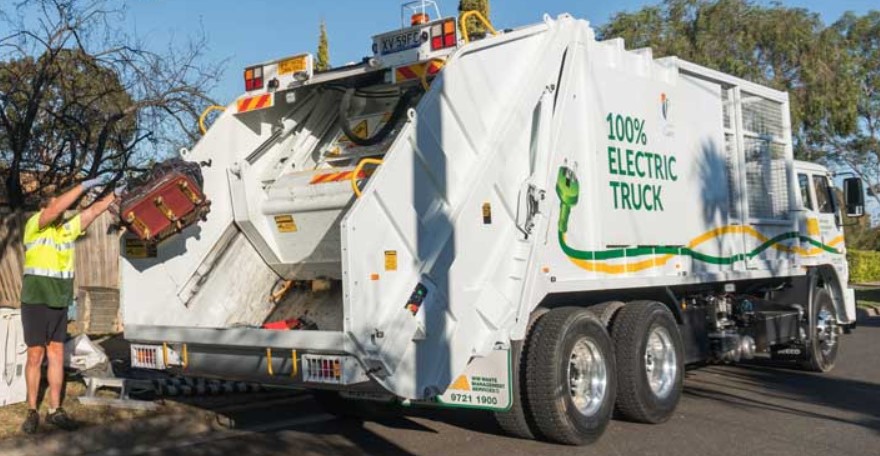
Here’s a fully electric rubbish truck that started work in 2019 in the City of Casey, in Melbourne. There is a similar rubbish truck working in Adelaide, too. The trucks are designed & made in Australia. Superior-Pak makes the trucks, while SEA Electric supplies the electric drives.
SEA has a factory in Dandenong where they electrify commercial vehicles: trucks, buses, and vans. SEA has won orders in the US and has moved to Los Angeles, USA.
(Australian electric truck company SEA powers into the USA market: The Driven: 5 Feb 2020)
(SEA Electric is mass-making electric trucks: An Australian first: The Driven: 24 March 2021)
(Australia’s electric truck success SEA is now based in the US: The Driven: 8 July 2021)
Battery prime movers: Janus Electric
Janus makes electric trucks and has just shown the first battery prime mover suitable for their planned battery swap stations on the East Coast.
(Janus unveils the first electric truck for the Australian east coast battery swap route: The Driven: 10 Feb 2022)
Electric all-terrain vehicles: EVolution
Melbourne-based company EVolution Australia converts vehicles to electric power: an all-terrain vehicle for the army.
(The first look at an electric all-terrain vehicle built for the Australian Defence Force: The Driven: 20 April 2021)
Low-carbon lithium processing: Novalith
Novalith is developing low-carbon lithium processing and has raised capital to set up a pilot plant in Sydney.
(Australian low-carbon lithium processing tech company aims for the sustainable battery market: Renew Economy: 25 Oct 2021)
Concentrating solar & energy storage: RayGen
RayGen is commercialising a fascinating type of concentrating solar and energy storage technology. Mirrors concentrate sunlight to generate electricity and heat. The heat warms a hot-water reservoir while the electricity chills a cold-water reservoir. Then, the temperature difference between the reservoirs powers a heat engine to generate electricity at any time of day.
- (RayGen to build a dispatchable solar-hydro-plant at Liddell in NSW: Renew Economy: 8 June 2021)
- (RayGen Website)
Hydrogen electrolyser technology: Hysata
Hysata is a start-up developing a super-efficient electrolyser to make hydrogen.
(Australian electrolyser promises the world’s cheapest green hydrogen: Renew Economy: 16 March 2022)
Making Buses: BusTech
BusTech Group is making electric buses and hybrid diesel/electric buses.
Robust agriculture: Sundrop Farms
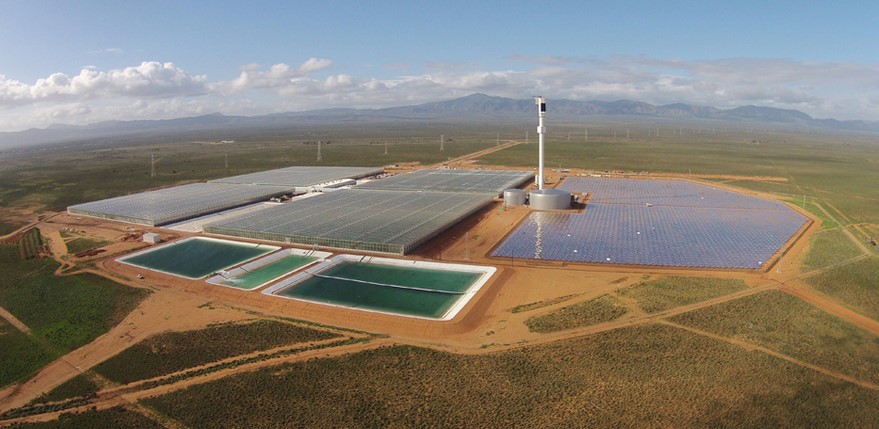
Renewable energy has enabled productive agriculture on this near-desert land, near Port Augusta in South Australia. Sundrop Farms has been growing tomatoes in these greenhouses since 2016. The company supplies Coles and grows about 15% of Australia’s tomatoes. Most Australians would have eaten some.
On the left, there are 20 hectares of greenhouses. They grow tomatoes in water, not in soil. The water is desalinated ocean water stored in the ponds in the foreground. On the right, there are over 23,000 mirrors that focus the sun’s rays on the tower to heat molten salts. The hot, molten salts are stored in the tanks and used to generate electricity on demand. This generator is a concentrating solar thermal generator. Solar electricity is available 24 hours a day to power the place, including desalinating seawater.
Sundrop Farms has shown one way renewable technology can revolutionise farming.
Drought proof agriculture using renewable energy
Battery Electric Flight
Commercial battery flight
The main challenge is battery weight: jet fuel carries about 25 times more usable energy per kilogram than batteries. Nevertheless, we are on the cusp of short electric commercial flights:
- Two-seater training planes are already flying.
- Small regional planes could enter service before 2030.
- Long-haul battery-electric flight is not currently possible
(How Batteries will power the skies: StartPac: Oct 2025)
Beaver Seaplane test flight

.
Here is a plane that could soon offer short-haul flights. Harbour Air in Vancouver, Canada, converted this Beaver seaplane to battery-electric power. The photo shows its first test flight on 10 December 2019. The plane has a range of 160 km and can carry six passengers. Harbour Air plans to convert its fleet, which carries half a million passengers a year.
This plane has flown over 90 times, covering more than 2,000 km. The process of gaining certification from aviation authorities continues.
(Successful flight of the world’s first commercial electric aeroplane: Harbour Air: 10 Dec 2019)
(Harbour Air, MagniX, and H55 partner aiming for the world’s first certified all-electric commercial aeroplane: Harbour Air: April 2021)
(Image credit: Clermont Group: MagniX)
MagniX electric propulsion systems
The company MagniX has made and installed its electric propulsion system in a range of planes; the birthplace of this technology was the MagniX engineering centre on the Australian Gold Coast in Queensland.
(The MagniX Story: MagniX)
Low emissions recycled steel: Laverton
The Laverton steelworks in Victoria recycles steel using an electric arc furnace and electric rolling mills. They make low-emissions steel products as they use (1) renewable electricity contracted from the Numurkah solar farm, and (2) electricity from the Victorian grid, which is 26% renewable.
(Infrabuild website: Sustainable steel)
Solar panel development: SunDrive
Australian company “SunDrive” is developing solar panel technology using copper instead of silver and claims a world-record panel efficiency.
(Hugh moment as Australia’s SunDrive claims new collar efficiency milestone: Renew Economy: 18 March 2022)
Australia is ready to prosper in a low-carbon world
These Australian companies developing technology and supplying equipment show that Australia is ready to prosper in a low-carbon world.
Related pages
- The main page on Australia’s progress to becoming a renewable energy superpower
Hub Pages: See the Footer below for links to the three hub pages, or the menu at the top of the page.
Updated 12 Jan 2026