Methane is a greenhouse gas that is about 25 times more potent than carbon dioxide. So, the current rapid increase of methane in our atmosphere is another factor driving global heating.
Methane levels are soaring.
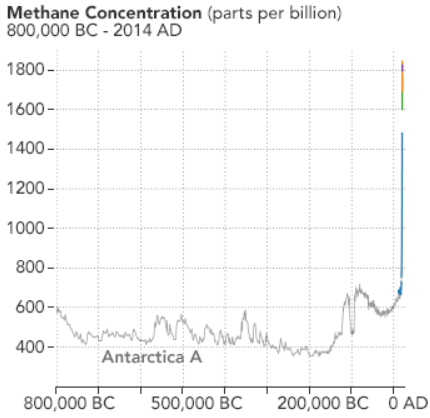
Graph of methane levels (NASA)
The graph shows how methane levels in the atmosphere have moved over the last 802,000 years.
- Each section on the timeline is 100,000 years.
- Methane moved between 400 and 600 parts per billion (ppb) for about 700,000 years.
- In 1750, at the start of the Industrial Revolution, it was about 700 ppb.
- By 2020, the levels had skyrocketed to 1,875 ppb.
The levels of methane in the atmosphere are soaring. It comes from:
- natural sources, including swamps, rivers, and volcanoes.
- human activities such as cattle raising, gas wells, gas pipeline leaks, oil wells, coal mines, rubbish dumps, sewage treatment, and rice farming.
- melting permafrost.
Permafrost
There are vast areas of permafrost in the Northern Hemisphere: one-quarter of its land has an underground layer that remains frozen year-round. Locked within this permafrost are enormous quantities of ancient plant and animal matter containing around 1.6 times as much carbon as is currently in the atmosphere. As global heating thaws this frozen ground, the organic matter decays, releasing methane and carbon dioxide into the atmosphere. This process creates another vicious cycle and could significantly increase global heating.
- The US National Snow and Ice Data Centre: Frozen Ground Permafrost
- Wikipedia: Permafrost
The permafrost feedback cycle.

In this amplifying feedback cycle:
- higher air temperatures tend to cause
- more melting of permafrost, with the exposure and decay of frozen plant and animal matter, which tends to
- increase atmospheric carbon dioxide & methane, which tends to
- increase greenhouse heating, which tends to
- increase air temperatures, and then the cycle repeats.
The cycle is dominant overall.
In some areas, at some times, low temperatures pause melting, and the cycle becomes dormant until temperatures rise. This pausing often happens overnight or in winter. Despite the cycle only being active intermittently, measurements show increases in every element of this feedback:
- Global air temperatures are rising,
- Permafrost temperatures deep within measurement boreholes are rising, indicating that permafrost thaw is also accelerating. (This was supported by the US EPA site: “www. epa.gov/climate-indicators/climate-change-indicators-permafrost”)
- Atmospheric carbon dioxide is surging, and
- Atmospheric methane is soaring.
These increases indicate that permafrost feedback is dominant overall. Human emissions of carbon dioxide and methane, along with other feedback cycles, support this permafrost cycle’s increase in global temperatures. (I describe eight more of these feedback cycles on this page.)
Time taken by the Methane cycle
This circular sequence of causal links takes time, with each physical change in the cycle contributing to this time:
- The link between temperature and permafrost melting is inherently slow because the air is warming the permafrost, which lies underground. Also, melting ice takes a large amount of energy.
- The link between melting and greenhouse gas release: Microbes metabolise the thawed organic matter, producing carbon dioxide when exposed to oxygen and methane in waterlogged ground. Higher temperatures would lead to more rapid decomposition.
- The link between greenhouse gas emissions and heating is both immediate and enduring. Once these greenhouse gases are in the atmosphere, their warming effect begins immediately and continues for as long as they remain there, which can be decades.
Pausing the cycle
Here are two ways the vicious permafrost cycle could become inactive.
- Lowering global temperatures: Humans might be able to do this by reducing greenhouse gas levels in the atmosphere, allowing more heat to escape into outer space and cool the planet. Nature might be able to do this with vast volcanic eruptions that blocked out the sun for an extended period.
- Exhausting the permafrost needed by the cycle to continue. If humans cannot stop this vicious cycle, it could continue and eventually limit itself by melting all the permafrost. The melting of all permafrost would release vast amounts of greenhouse gases into the atmosphere, greatly increasing global warming.
This cycle is not reversible.
This permafrost cycle cannot run in reverse. It’s unlikely that global temperatures will drop soon. Still, if the temperatures did drop, the cold could consolidate the remaining permafrost, but the cooling would not draw atmospheric methane and carbon dioxide back into buried, frozen soil.
Permafrost
As the name “permafrost” suggests, people have regarded it as permanently frozen ground; however, global warming is thawing it. Thawing can cause the ground to buckle and sink, and trees to lean and fall.
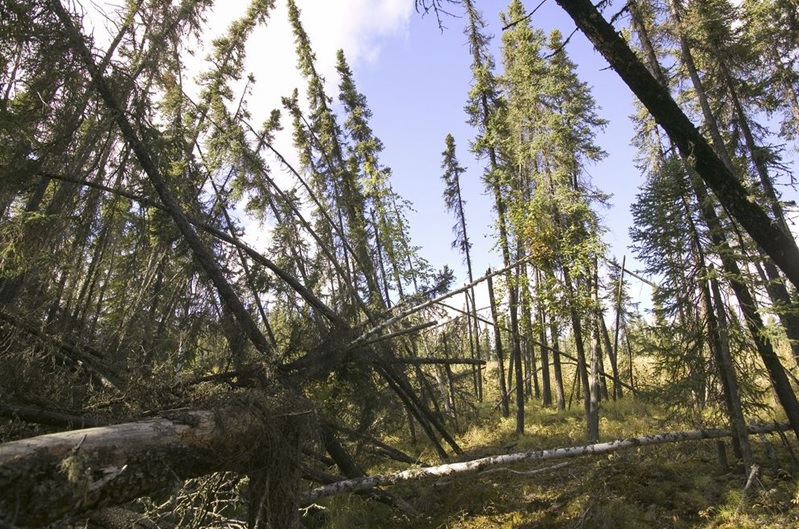
Thawing permafrost has caused severe
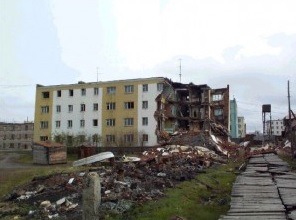
The Earth’s methane levels are rising, and we do not know why
(New Scientist: May 2019)
Arctic soil thaw may unleash runaway global warming (Scientific American, 2008)
The current warming could lead to methane release dominating our climate, and spiralling global warming, even if humans stopped burning fossil fuels.
Related pages on this site
- Amplifying feedback cycles and climate change
- Carbon dioxide levels in the air are soaring
- Methane levels in the air are soaring
- Air Temperatures are increasing
Loaded: August 2019: Updated: 15 April 2026
Featured image: none set